Air Purifiers for Smoke, Wildfire, and Forest Fires
When smoke from a wildfire or forest fire enters your home, the danger isn't limited to what you can see or smell. Along with fine particulates, forest fire smoke carries VOCs (volatile organic compounds) and other gases — invisible chemicals that HEPA filtration alone cannot remove.
The right air purifier depends on what you're most concerned about:
- If VOCs, chemicals, and gases are the primary concern, you'll want an air purifier with a larger carbon bed — the more carbon media a unit holds, the more capacity it has to adsorb these gases over time.
- If your goal is overall healthier air during a wildfire or forest fire event — addressing both smoke particulates and gases — you'll want a unit that combines true HEPA filtration with a substantial carbon bed, giving you protection against both threats at once.
If the wildfire is primarily burning conifers — pine, fir, cedar, and similar trees — formaldehyde levels can also rise significantly. In these cases, we recommend an air purifier with a deeper carbon bed specifically suited to formaldehyde removal, such as the Airpura F600, or the higher-capacity F700/S700 for larger spaces or heavier smoke exposure. (More on choosing the right unit →)
65 results
-
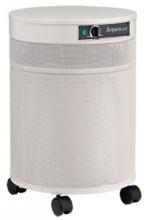 $1,249.98
- Covers up to 2500 sq ft
- Best for Heavy Tobacco Use & Cigar Use
- 23" high, 15" wide
- All steel
-
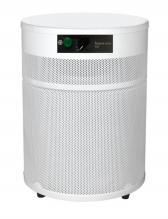 $709.98
- Covers up to 1000 sq ft 2 ACH
- Heavy Smoke Focus
- Great for Smaller Rooms
- Quiet too - 32 dB - 52 dB
-
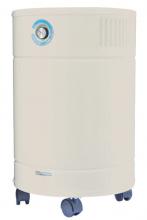 $899.98 $637.98
- 1500 sq ft
- Great for newly renovated environments
- Excellent for airborne pollutants, odor, and VOCs
- Replaces 5000 Vocarb without UV
-
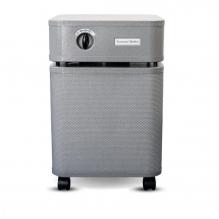 $1,144.99
- Covers 1500 sq ft
- Austin's Most Powerful Unit
- 8 Phase Filtration
- 5 Year Warranty
-
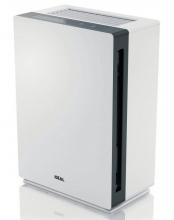 $699.00 $499.00
- Made in Germany
- Low Decibels 18.7-63.4
- Very Powerful CFM 470
- Easy Maintenance
-
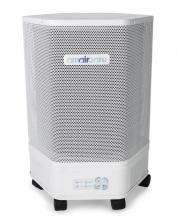 $1,064.00
- Covers 1800 sq ft
- Heavy VOC Protection
- 30 lb Carbon Canister
- NO HEPA
-
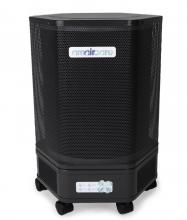 $938.00
- Covers 1800 sq ft
- Silent mode
- Low EMF
- Includes Pleated VOC Canister
-
- Covers up to 2500 sq ft
- Excellent for VOG, VOCs, & Forest Fires
- Great for Sulfur Gases, Highway Fumes
- Also good for TCE and PCE
-
- Covers up to 2500 sq ft
- 23" high, 15" wide
- Wild Fires - Particulates and VOCs
- Ammonias from cleaners
-
- Covers up to 2500 sq ft
- 23" high, 15" wide
- Medical Grade HEPA Plus SuperGas Carbon
- Particulates Plus Widest Realm of VOCs
-
- Covers up to 1000 sq ft 2 ACH
- Great for Smaller Rooms
- Quiet too - 32 dB - 52 dB
- Particulates Plus Widest Realm of VOCs & Formaldehyde
-
- Covers up to 1000 sq ft 2 ACH
- Enhanced Activated Carbon
- Great for Smaller Rooms
- Quiet too - 32 dB - 52 dB
-
- Covers up to 1000 sq ft 2 ACH
- Great for Smaller Rooms
- Quiet too - 32 dB - 52 dB
- Widest Realm of VOCs Including Formaldehyde
-
- Covers up to 1000 sq ft 2 ACH
- Heavy VOC Focus
- Great for Smaller Rooms
- Quiet too - 32 dB - 52 dB
-
- Covers up to 2000 sq ft
- 23" high, 15" wide
- Wild Fires - Particulates and VOCs
- Ammonias from cleaners
-
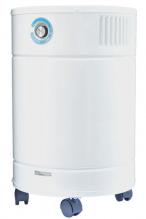 $999.98 $722.98
- Covers 2000 sq ft
- Great for newly renovated environments
- Excellent for airborne pollutants, odor, and VOCs
- Replaces 6000 Vocarb without UV
-
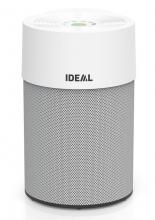 $399.00 $299.00
- Made in Germany
- Low Decibels 16.7-61.7
- Very Powerful CFM 258
- Easy Maintenance
-
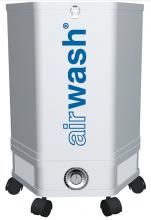 $1,049.00
- Covers 18,000 ft3 (provides 1 ACH)
- 300 CFM
- Variable speed switch
- HEPA & Carbon Canister
-
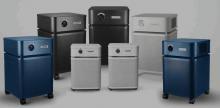 $2,164.97 $2,064.97
- Best Savings Option
- Build Your Own Bundle
- Easy Maintenance
- More Healthier Rooms
-
- Covers up to 2500 sq ft
- Affordable Chemical Abatement
- 26 lbs of carbon
- Featuring Activated Carbon
-
- Covers up to 2000 sq ft
- Affordable Chemical Abatement
- 26 lbs of carbon
- Featuring Activated Carbon
-
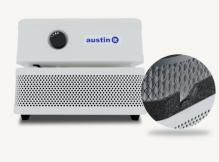 $359.99
- Personal Air Purifier
- Medical Grade HEPA
- Plus Carbon Wrap
- Coverage 750 sq ft.
-
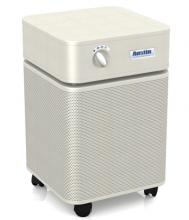 $894.99
- Covers 1500 sq ft
- 5 Year Warranty
- All Steel
- Stronger VOC, Chemical Removal
-
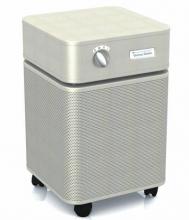 $994.99
- Covers 1500 sq ft
- Designed for a Better Sleep
- 5 Stage Filtration
- Variety of Plug Options
-
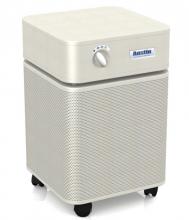 $844.99
- Covers 1500 sq ft
- Variety of Plug Options
- All Steel
- Great for Everyday Air Quality Concerns
-
- Covers up to 2500 sq ft
- Excellent for Formaldehdyes & VOCs
- 23" high, 15" wide
- All steel
-
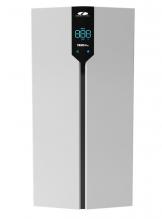 $1,455.00 $1,087.24
- Covers 1,618 sq ft with 3 ACH
- VOC and Particle Sensors
- >99.97% effective at .3 microns
- Ozone Free
-
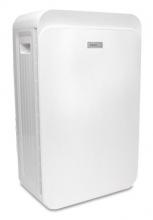 $1,100.00 $414.27
- Covers 1100 sq ft with 3 ACH
- Particle Sensor
- >99.97% effective at .3 microns
- Ozone Free
-
- Covers up to 2500 sq ft
- Best for Tobacco Use
- 23" high, 15" wide
- All steel
-
- Covers up to 2000 sq ft
- Excellent for VOG, VOCs, & Forest Fires
- Great for Sulfur Gases, Highway Fumes
- Also good for TCE and PCE
-
- Covers up to 1000 sq ft 2 ACH
- VOC Focus
- Great for Smaller Rooms
- Quiet too - 32 dB - 52 dB
-
- Covers up to 2000 sq ft
- Excellent for Formaldehdyes & VOCs
- 23" high, 15" wide
- All steel
-
- Covers up to 1000 sq ft 2 ACH
- Formaldehyde Focus
- Great for Smaller Rooms
- Quiet too - 32 dB - 52 dB
-
- Covers up to 1000 sq ft 2 ACH
- Excellent for General Overall Protection
- Great for Smaller Rooms
- Quiet too - 32 dB - 52 dB
-
- Covers up to 2000 sq ft
- Best for Heavy Tobacco Use & Cigar Use
- 23" high, 15" wide
- All steel
-
- Covers up to 2000 sq ft
- Best for Tobacco Use
- 23" high, 15" wide
- All steel
-
- Covers up to 1000 sq ft 2 ACH
- Smoke Focus
- Great for Smaller Rooms
- Quiet too - 32 dB - 52 dB
-
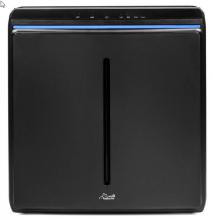 $749.95
- Covers 2 ACH for 1070 sq ft
- Easy maintenance
- Wall mountable
- Ultra quiet
-
- Covers up to 1000 sq ft 2 ACH
- Formaldehyde Focus Plus HEPA
- Great for Smaller Rooms
- Quiet too - 32 dB - 52 dB
-
- Covers up to 1000 sq ft 2 ACH
- German Carbon
- Great for Smaller Rooms
- Quiet too - 32 dB - 52 dB
-
- Covers up to 1000 sq ft 2 ACH
- German Carbon Plus HEPA
- Great for Smaller Rooms
- Quiet too - 32 dB - 52 dB
-
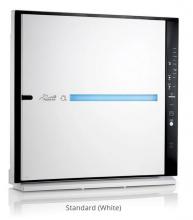 $599.95
- Covers 2 ACH for 815 sq ft
- Energy Star certified
- Wall mountable
- Ultra quiet
-
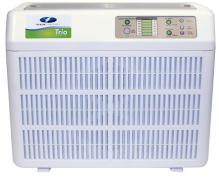 $759.16
- Covers over 1000 sq ft
- 99.97% Particles Reduction in First Pass
- 93.6% Bacteria Reduction in Just 2 Hrs
- Ozone Free
-
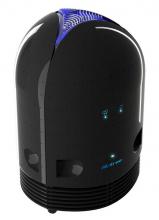 $299.00
- Covers 650 sq ft
- Ideal for Mold, Germs, and Viruses
- Boost Technology for Faster Results
- Totally Maintenance & Filter Free
-
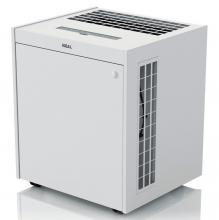 $999.00 $950.00
- Made in Germany
- Low Decibels 25.2-60.3
- Very Powerful CFM 824
- Easy Maintenance
-
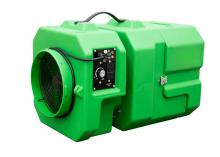 $1,328.00
- Covers 41,400 ft3 (provides 1 ACH)
- 27 lb Carbon Canister & No HEPA
- CFM 800
- Focus is Heavy VOCs, Gases, Odors
-
- Covers 41,400 ft3 (provides 1 ACH)
- HEPA & 5 lb Carbon Canister
- Est CFM 700-800
- Focus is Particulate with Moderate VOCs, Gases, Odors
-
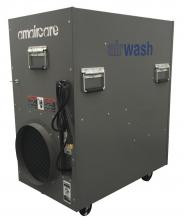 $3,045.00
- Powerful 1800 CFM
- 60 lbs Carbon
- Easy to Maintenance
- Affordable
-
- Powerful & Versatile
- HEPA/Carbon Configuration
- Easy to Maintenance
- Affordable
-
- 1500 sq ft
- Excellent for smoke
- 21-27 lbs Carbon Canister
- Replaces 5000 DS & 5000 DXS
-
- Covers 2000 sq ft
- Great for smoke
- 28-34 lbs Carbon Canister
- Replaces 6000 DS & 6000 DXS
-
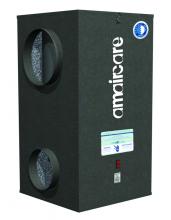 $1,133.00
- Covers 2625 sq ft (provides 1 ACH)
- 340 CFM
- Installation kit available
- HEPA Plus VOC upgrade
-
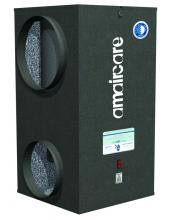 $1,473.00
- Covers 5062 sq ft (provides 1 ACH)
- 660 CFM
- Installation kit available
- HEPA Plus VOC upgrade
-
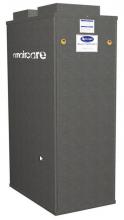 $4,967.00
- Covers 60,000 ft3 (provides 1 ACH)
- Variable speed switch
- Moderate VOCs
- 3 Sets of 16" Filters
-
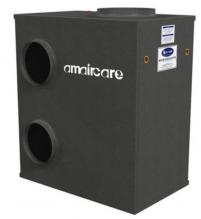 $3,469.00
- Covers 60,000 ft3 (provides 1 ACH)
- 1000 CFM
- 2 Sets of 16" Filters
- Comes without a cart
-
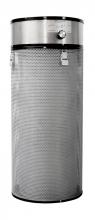 $2,039.98
- 30 lbs of carbon
- Micro-HEPA wrap
- Free Flow CFM 420
- Dimensions: 29" x 12"
-
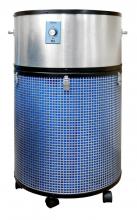 $5,519.98
- 2000 CFM (Free Flowing)
- 60 lbs of carbon
- Micro-HEPA wrap
- 900-1600 CFM (Delivered)
-
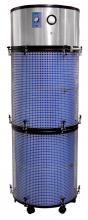 $8,039.98
- 120 lbs of carbon
- Micro-HEPA wrap
- 2000 Free Flow CFM
- Dimensions: 62" x 22"
-
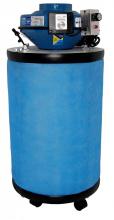 $2,759.98
- 30 lbs (20CC) of activate carbon
- Industrial-grade
- 10 micron adhesive capturing pre-filter
- 785 CFM (Free Flowing)
-
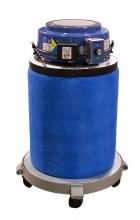 $5,159.98
- 60 lbs (24CC) of activated carbon
- Industrial-grade
- 10 micron adhesive capturing pre-filter
- 1000 CFM (Free Flowing)
-
 $7,198.98
- 120 lbs (48CC) of activated carbon
- Industrial-grade
- 10 micron adhesive capturing pre-filter
- 1000 CFM (Free Flowing)
-
Call for Price - (888) 231-1463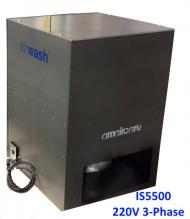
- 2500 Delivered CFM
- 220V 3-Phase
- Versatile Filter Configurations
- 4 Sets of 16" Filters Sets
-
- Covers up to 2500 sq ft
- 26 lb Proprietary SuperGas Carbon
- Powerful 88-450 Delivered CFM
- Widest Realm of VOCs Including Formaldehyde
-
- Covers up to 2000 sq ft
- 26 lb Proprietary SuperGas Carbon
- HEPA-Barrier for .1 micron and larger
- Widest Realm of VOCs Including Formaldehyde
-
- Covers up to 2000 sq ft
- 23" high, 15" wide
- Medical Grade HEPA Plus SuperGas Carbon
- Particulates Plus Widest Realm of VOCs
When wildfire or forest fire smoke is heavy, using more than one portable air purifier is often more effective than running a single unit at full capacity. Multiple units let you run each one on medium instead of high, which increases dwell time — the longer contaminated air stays in contact with the carbon bed, the more VOCs it can adsorb per pass. The key is making sure your total airflow still outpaces how quickly contaminants are entering the space; running slower only helps if you're still moving enough air to stay ahead of the source. Multiple units also spread the workload across filters, extending their usable life when contaminant levels are heavy.
If VOCs, odors, and gases are your primary concern, more carbon is generally better — as long as the unit still has enough delivered CFM to keep pace with the contaminant load, as noted above. A good example is AllerAir's Pro 5 and Pro 6 series: both are solid choices with Vocarb carbon. Since the HD Vocarb unit offers more carbon than the Plus Vocarb unit, its VOC adsorption is usually greater. If wildfire smoke has left you sensitive to VOCs and chemical odors long after the air clears, our guide to air purifiers for VOCs and chemical sensitivity covers carbon options in more depth.
As a general rule of thumb, plan on one air purifier per 350–500 sq ft to stay on the conservative side of adequate coverage — a helpful benchmark for sizing most portable units to a space. Keep in mind the air closest to the purifier will typically be the cleanest, so placement matters as much as capacity.
If your budget allows for only one air purifier, place it strategically: either in your bedroom, to create a clean-air zone for sleep, or in your home's most-used living space, to protect the area where you and your family spend the most time.