Air Purifiers for Medical Marijuana Dispensaries
Unlike a grow room, a dispensary usually isn't fighting mold — the bigger challenge is odor. Cannabis terpenes are strong and persistent, and they build up fast on a sales floor or in a back room where product is handled throughout the day. We offer commercial-grade air purifiers built for cannabis odor control, reducing that odor along with the airborne VOCs that cause it.
When you're choosing a unit for a dispensary, look for one that reduces VOCs specifically — that means a carbon filter or an equivalent filtration medium, not just a HEPA filter on its own. (continue reading)
34 results
-
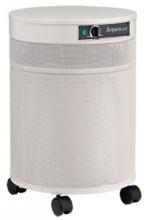 $1,199.98
- Covers up to 2000 sq ft
- 26 lb Proprietary SuperGas Carbon
- HEPA-Barrier for .1 micron and larger
- Widest Realm of VOCs Including Formaldehyde
-
- Covers up to 2500 sq ft
- 26 lb Proprietary SuperGas Carbon
- Powerful 88-450 Delivered CFM
- Widest Realm of VOCs Including Formaldehyde
-
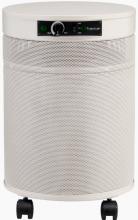 $1,349.98
- Upgraded VOC & Odor protection
- Covers up to 2500 sq ft
- Sterilizes antigens, pathogens, and mold spores
- 3 Levels of Filtration
-
- Excellent Dwell Time
- Covers up to 2500 sq ft
- Sterilizes antigens, pathogens, and mold spores
- 3 Levels of Filtration
-
- Covers up to 2500 sq ft
- 23" high, 15" wide
- Medical Grade HEPA Plus SuperGas Carbon
- Particulates Plus Widest Realm of VOCs
-
- Covers up to 2000 sq ft
- 23" high, 15" wide
- Medical Grade HEPA Plus SuperGas Carbon
- Particulates Plus Widest Realm of VOCs
-
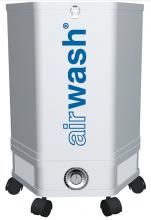 $1,049.00
- Covers 18,000 ft3 (provides 1 ACH)
- 300 CFM
- Variable speed switch
- HEPA & Carbon Canister
-
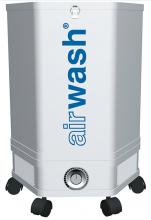 $1,049.00
- Covers 18,000 ft3 (provides 1 ACH)
- Variable Speed
- Focus HEAVY VOCs, gases, & Odors
- 27 lbs of carbon
-
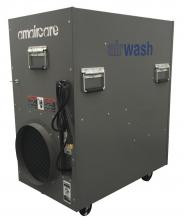 $3,045.00
- Powerful 1800 CFM
- 60 lbs Carbon
- Easy to Maintenance
- Affordable
-
- Powerful & Versatile
- HEPA/Carbon Configuration
- Easy to Maintenance
- Affordable
-
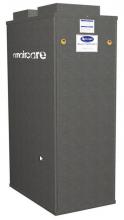 $5,240.00
- Covers 60,000 ft3 (provides 1 ACH)
- Variable speed switch
- Heavy VOCs
- 3 Sets of 16" Filters
-
- Covers 60,000 ft3 (provides 1 ACH)
- 1000 CFM & Variable speed switch
- Light VOCs
- 3 Sets of 16" Filters
-
- Covers 60,000 ft3 (provides 1 ACH)
- Variable speed switch
- Moderate VOCs
- 3 Sets of 16" Filters
-
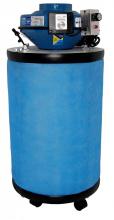 $2,759.98
- 30 lbs (20CC) of activate carbon
- Industrial-grade
- 10 micron adhesive capturing pre-filter
- 785 CFM (Free Flowing)
-
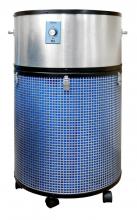 $5,819.98
- 60 lbs of carbon with UV
- Micro-HEPA wrap
- 2000 Free Flow CFM
- Dimensions: 30" x 22"
-
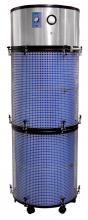 $8,339.98
- 120 lbs of carbon with UV
- Micro-HEPA wrap
- 2000 Free Flow CFM
- Dimensions: 62" x 22"
-
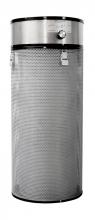 $2,519.97
- 30 lbs of carbon with UV
- Micro-HEPA wrap
- Free Flow CFM 420
- Dimensions: 29" x 12"
-
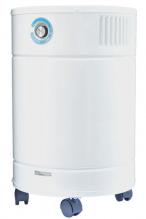 $999.98 $722.98
- Covers 2000 sq ft
- Great for newly renovated environments
- Excellent for airborne pollutants, odor, and VOCs
- Replaces 6000 Vocarb without UV
-
- Covers 2000 sq ft
- Focus is VOCs, gases, and odors
- UV Lamp offers added protection from germs & mold
- Replaces 6000 Vocarb UV
-
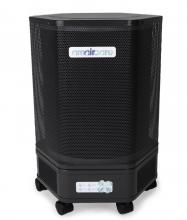 $938.00
- Covers 1800 sq ft
- Silent mode
- Low EMF
- Includes Pleated VOC Canister
-
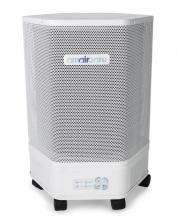 $1,064.00
- Covers 1800 sq ft
- Heavy VOC Protection
- 30 lb Carbon Canister
- NO HEPA
-
- Upgraded VOC & Odor protection
- Covers up to 2000 sq ft
- Sterilizes antigens, pathogens, and mold spores
- 3 Levels of Filtration
-
- Excellent Dwell Time
- Covers up to 2000 sq ft
- Sterilizes antigens, pathogens, and mold spores
- 3 Levels of Filtration
-
- 2000 CFM (Free Flowing)
- 60 lbs of carbon
- Micro-HEPA wrap
- 900-1600 CFM (Delivered)
-
- 120 lbs of carbon
- Micro-HEPA wrap
- 2000 Free Flow CFM
- Dimensions: 62" x 22"
-
- 30 lbs of carbon
- Micro-HEPA wrap
- Free Flow CFM 420
- Dimensions: 29" x 12"
-
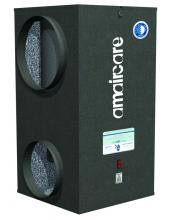 $1,473.00
- Covers 5062 sq ft (provides 1 ACH)
- 660 CFM
- Installation kit available
- HEPA Plus VOC upgrade
-
- Focus on VOCs, gases, odors
- Medical Grade HEPA
- UV Lamp for added protection
- Replaces 6000 Vocarb UV
-
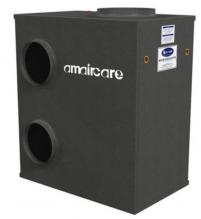 $3,469.00
- Covers 60,000 ft3 (provides 1 ACH)
- 1000 CFM
- 2 Sets of 16" Filters
- Comes without a cart
-
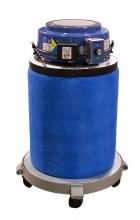 $5,159.98
- 60 lbs (24CC) of activated carbon
- Industrial-grade
- 10 micron adhesive capturing pre-filter
- 1000 CFM (Free Flowing)
-
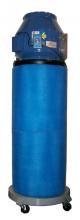 $7,198.98
- 120 lbs (48CC) of activated carbon
- Industrial-grade
- 10 micron adhesive capturing pre-filter
- 1000 CFM (Free Flowing)
-
Call for Price - (888) 231-1463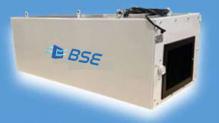
- Made in USA
- 850-1100 Delivered CFM
- Wide Array of Configurations
- Optional NPBI Technology
-
Call for Price - (888) 231-1463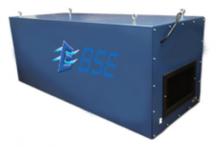
- Made in USA
- 2250-2500 Delivered CFM
- Wide Array of Configurations
- Optional: NPBI Technology
-
Call for Price - (888) 231-1463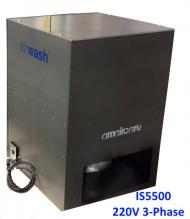
- 2500 Delivered CFM
- 220V 3-Phase
- Versatile Filter Configurations
- 4 Sets of 16" Filters Sets
Why Odor Is the Main Concern
Cannabis terpenes are volatile organic compounds (VOCs), meaning they keep off-gassing from product, packaging, and grind residue rather than settling out of the air on their own. Terpene odor removal depends on more than particle filtration — HEPA captures particles, not the gas-phase molecules responsible for odor. Effective odor control depends on carbon or an equivalent VOC-adsorbing media, paired with enough airflow to keep pace with how much odor is entering the space.
Air Changes Per Hour for a Dispensary
Odor load isn't the same throughout a dispensary, so it helps to think about ACH by zone rather than picking one number for the whole facility.
Front of house (sales floor, waiting area): 4-10 air changes per hour (ACH) is a reasonable range for spaces where product is present but not actively being handled.
Back of house (packaging, storage, grind stations): 8-12 ACH is a better target here, since VOC concentration runs higher wherever product is being touched, weighed, or broken down.
Sizing each zone separately, rather than one unit for the whole facility, generally gets better results for the same total investment.
A Note on Ultra-Fine Particles
If your facility handles any packaging on-site — grinding, weighing, or sealing product — you may also be dealing with ultra-fine particulates in addition to odor. Worth knowing: units built for higher VOC loads generally use a heavier carbon bed, and that often comes at the expense of medical-grade HEPA filtration in the same unit. So in back-of-house areas with heavier VOC concentration, it's worth pairing that carbon-heavy filtration with some HEPA capability too, rather than expecting one unit to max out both at once.
What to Expect
No air purifier will completely eliminate odor in an active dispensary — there's ongoing off-gassing from product moving through the space all day. What the right setup does is meaningfully reduce odor buildup, so it doesn't drift into other areas or become noticeable to customers and neighboring businesses.
Frequently Asked Questions
Do dispensaries need to worry about mold like grow rooms do? Not typically. Grow rooms deal with humidity and plant matter that create real mold risk. A dispensary's air quality challenge is almost always odor and VOCs from finished product, not mold.
Can an air purifier fully get rid of dispensary odor? No — ongoing off-gassing means some odor will always be present in an active space. A properly sized carbon/VOC system meaningfully reduces it so it doesn't build up or drift into other areas.
Do I need different air purifiers for the sales floor versus the packaging room? It's worth considering. Packaging and grind areas typically have a higher VOC load, which usually means a heavier carbon bed and less room for medical-grade HEPA in the same unit. If ultra-fine particulates are also a factor, pairing carbon-heavy filtration with some HEPA capability is worth planning for.
These same units are also excellent options for morgues, funeral homes, and hospitals.
Visit our PDF library for more information: