Air Purifiers for VOCs, Chemical Sensitivity & MCS
If you're sensitive to VOCs (volatile organic compounds), chemical odors, or gases -- or dealing with MCS (multiple chemical sensitivities) -- finding the right air purifier for VOCs, chemical sensitivity, or MCS can make a real difference. Carbon filtration is one of the most effective ways to reduce the VOCs and odors that trigger sensitive individuals.
Airpura offers several models designed for chemical sensitivity -- if you know what you're sensitive to, let us know and we'll help you find the best fit. We also carry MCS-specific options, including AllerAir's specialized test kit -- more on that below.
80 results
-
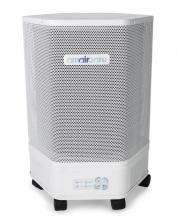 $1,064.00
- Covers 1800 sq ft
- Heavy VOC Protection
- 30 lb Carbon Canister
- NO HEPA
-
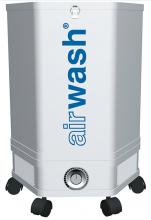 $1,049.00
- Covers 18,000 ft3 (provides 1 ACH)
- Variable Speed
- Focus HEAVY VOCs, gases, & Odors
- 27 lbs of carbon
-
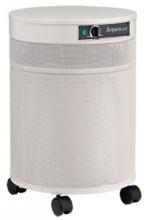 $1,349.98
- Covers up to 2500 sq ft
- 26 lb Proprietary SuperGas Carbon
- Powerful 88-450 Delivered CFM
- Widest Realm of VOCs Including Formaldehyde
-
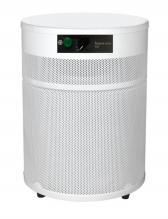 $789.98
- Covers up to 1000 sq ft 2 ACH
- Great for Smaller Rooms
- Quiet too - 32 dB - 52 dB
- Widest Realm of VOCs Including Formaldehyde
-
- Covers up to 2500 sq ft
- 23" high, 15" wide
- Medical Grade HEPA Plus SuperGas Carbon
- Particulates Plus Widest Realm of VOCs
-
- Covers up to 1000 sq ft 2 ACH
- Great for Smaller Rooms
- Quiet too - 32 dB - 52 dB
- Particulates Plus Widest Realm of VOCs & Formaldehyde
-
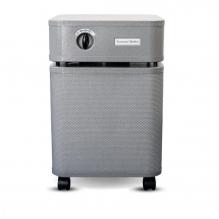 $1,144.99
- Covers 1500 sq ft
- Austin's Most Powerful Unit
- 8 Phase Filtration
- 5 Year Warranty
-
- Covers up to 2500 sq ft
- Best for Heavy Tobacco Use & Cigar Use
- 23" high, 15" wide
- All steel
-
- Covers up to 1000 sq ft 2 ACH
- Heavy Smoke Focus
- Great for Smaller Rooms
- Quiet too - 32 dB - 52 dB
-
- Covers up to 2500 sq ft
- Best for Tobacco Use
- 23" high, 15" wide
- All steel
-
- Covers up to 1000 sq ft 2 ACH
- Smoke Focus
- Great for Smaller Rooms
- Quiet too - 32 dB - 52 dB
-
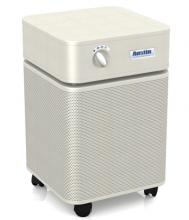 $894.99
- Covers 1500 sq ft
- 5 Year Warranty
- All Steel
- Stronger VOC, Chemical Removal
-
- Covers up to 1000 sq ft 2 ACH
- Enhanced Activated Carbon
- Great for Smaller Rooms
- Quiet too - 32 dB - 52 dB
-
- Covers up to 2500 sq ft
- 23" high, 15" wide
- Wild Fires - Particulates and VOCs
- Ammonias from cleaners
-
- Covers up to 2500 sq ft
- Excellent for VOG, VOCs, & Forest Fires
- Great for Sulfur Gases, Highway Fumes
- Also good for TCE and PCE
-
- Covers up to 1000 sq ft 2 ACH
- Heavy VOC Focus
- Great for Smaller Rooms
- Quiet too - 32 dB - 52 dB
-
- Covers up to 2500 sq ft
- Affordable Chemical Abatement
- 26 lbs of carbon
- Featuring Activated Carbon
-
- Covers up to 1000 sq ft 2 ACH
- VOC Focus
- Great for Smaller Rooms
- Quiet too - 32 dB - 52 dB
-
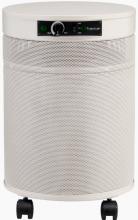 $1,349.98
- Upgraded VOC & Odor protection
- Covers up to 2500 sq ft
- Sterilizes antigens, pathogens, and mold spores
- 3 Levels of Filtration
-
- Covers up to 2500 sq ft
- Top Filtration-VOCs & Micro-organisms
- 18 lbs of carbon
- TitanClean Photocatalytic Oxidation
-
- Covers up to 1000 sq ft 2 ACH
- Formaldehyde Focus Plus HEPA
- Great for Smaller Rooms
- Quiet too - 32 dB - 52 dB
-
- Covers up to 1000 sq ft 2 ACH
- Formaldehyde Focus
- Great for Smaller Rooms
- Quiet too - 32 dB - 52 dB
-
- Covers up to 2500 sq ft
- Excellent for Formaldehdyes & VOCs
- 23" high, 15" wide
- All steel
-
- Covers up to 2500 sq ft
- Focus is Formaldehyde
- Not recommended for severe MCS
- 26 lb super enhanced impregnated activated carbon
-
- Covers up to 1000 sq ft 2 ACH
- Excellent for General Overall Protection
- Great for Smaller Rooms
- Quiet too - 32 dB - 52 dB
-
- Step above P600 for VOCs, gases, odors
- Top Filtration-VOCs & Micro-organisms
- HEPA coated with TiO2
- TitanClean Photocatalytic Oxidation
-
- Covers up to 2500 sq ft
- Excellent for General Overall Protection
- Great for residential areas
- 23" high, 15" wide
-
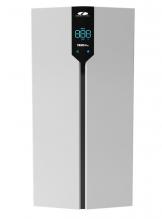 $1,455.00 $1,087.24
- Covers 1,618 sq ft with 3 ACH
- VOC and Particle Sensors
- >99.97% effective at .3 microns
- Ozone Free
-
- Covers up to 1000 sq ft 2 ACH
- German Carbon
- Great for Smaller Rooms
- Quiet too - 32 dB - 52 dB
-
- Covers up to 1000 sq ft 2 ACH
- German Carbon Plus HEPA
- Great for Smaller Rooms
- Quiet too - 32 dB - 52 dB
-
- 18 lb Large German Carbon Bed
- Great for Chemically Sensitive Clients like MCS
- Covers up to 2500 sq ft
- High Quality HEPA
-
- 26 lb Large German Carbon Bed
- Great for Chemically Sensitive Clients like MCS
- Covers up to 2500 sq ft
- HEPA Barrier
-
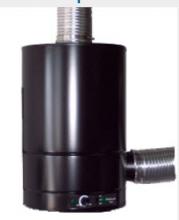 $2,199.98
- Whole Home Unit-installation required
- Top Filtration-VOCs & Micro-organisms
- 18 lbs of carbon
- TitanClean Photocatalytic Oxidation
-
- Covers up to 2000 sq ft
- 26 lb Proprietary SuperGas Carbon
- HEPA-Barrier for .1 micron and larger
- Widest Realm of VOCs Including Formaldehyde
-
- Excellent for General Overall Protection
- Variable Control
- Available for 220V Also
- Optional UV Lamp for Added Protection
-
- Covers up to 2000 sq ft
- Affordable Chemical Abatement
- 26 lbs of carbon
- Featuring Activated Carbon
-
- Covers up to 2000 sq ft
- Excellent for VOG, VOCs, & Forest Fires
- Great for Sulfur Gases, Highway Fumes
- Also good for TCE and PCE
-
- Excellent Dwell Time
- Covers up to 2500 sq ft
- Sterilizes antigens, pathogens, and mold spores
- 3 Levels of Filtration
-
- 18 lb Large German Carbon Bed
- Great for Chemically Sensitive Clients like MCS
- Covers up to 2000 sq ft
- High Quality HEPA
-
- 26 lb Large German Carbon Bed
- Great for Chemically Sensitive Clients like MCS
- Covers up to 2000 sq ft
- HEPA Barrier
-
- Covers up to 2000 sq ft
- 23" high, 15" wide
- Medical Grade HEPA Plus SuperGas Carbon
- Particulates Plus Widest Realm of VOCs
-
- Covers up to 2000 sq ft
- 23" high, 15" wide
- Wild Fires - Particulates and VOCs
- Ammonias from cleaners
-
- Covers up to 2500 sq ft
- Excellent for Formaldehdyes & VOCs
- 99.99% efficient at .1 micron
- All steel
-
- Covers up to 2000 sq ft
- Top Filtration-VOCs & Micro-organisms
- 18 lbs of carbon
- TitanClean Photocatalytic Oxidation
-
- Step above P600 for VOCs, gases, odors
- Top Filtration-VOCs & Micro-organisms
- HEPA coated with TiO2
- TitanClean Photocatalytic Oxidation
-
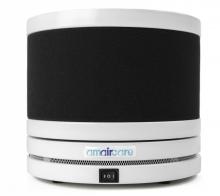 $249.00
- Covers 300 sq ft
- Ideal for bedrooms and small offices
- Removes hazardous VOCs
- All steel
-
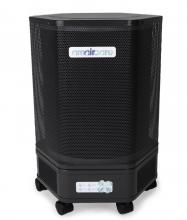 $938.00
- Covers 1800 sq ft
- Silent mode
- Low EMF
- Includes Pleated VOC Canister
-
- Focus Hair Salons
- Special Carbon Blend for Formaldehyde
- Focus HEAVY VOCs, gases, & Odors
- Variable Speed
-
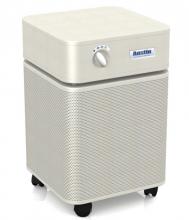 $844.99
- Covers 1500 sq ft
- Variety of Plug Options
- All Steel
- Great for Everyday Air Quality Concerns
-
 $199.00 $149.00
- Excellent for Allergens & VOCs
- Wearable HEPA with Carbon Air Purifier
- NO Ozone
- Lightweight just 8 oz
-
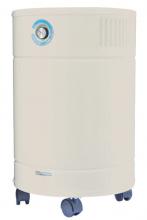 $899.98 $637.98
- 1500 sq ft
- Great for newly renovated environments
- Excellent for airborne pollutants, odor, and VOCs
- Replaces 5000 Vocarb without UV
-
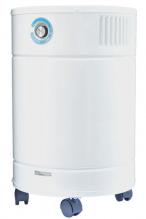 $999.98 $722.98
- Covers 2000 sq ft
- Great for newly renovated environments
- Excellent for airborne pollutants, odor, and VOCs
- Replaces 6000 Vocarb without UV
-
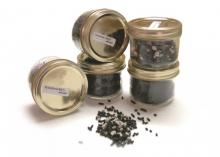 $107.00
- Simple to Use
- Sample various carbon blends
- Receive a credit on future purifier
- Saves you money
-
- Ideal for MCS focus
- Customize your carbon
- Medical Grade MCS HEPA
- Replaces 5000 MCS Supreme
-
- Ideal for MCS focus
- Customize your carbon
- Super HEPA
- Carbon Canister estimated at 21-23 lbs
-
- 2000 sq ft
- Focus on VOCs, Gases, & Odors
- 18 lbs of Carbon
- Medical Grade HEPA
-
- 1500 sq ft
- Medical Grade HEPA
- UV Lamp for added protection
- Replaces 5000 Vocarb UV
-
- Focus on VOCs, gases, odors
- Medical Grade HEPA
- UV Lamp for added protection
- Replaces 6000 Vocarb UV
-
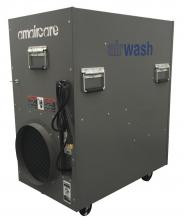 $2,863.00
- Powerful & Versatile
- HEPA/Carbon Configuration
- Easy to Maintenance
- Affordable
-
- Powerful 1800 CFM
- 60 lbs Carbon
- Easy to Maintenance
- Affordable
-
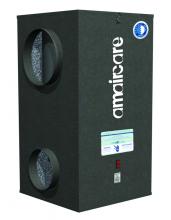 $1,133.00
- Covers 2625 sq ft (provides 1 ACH)
- 340 CFM
- Installation kit available
- HEPA Plus VOC upgrade
-
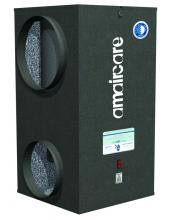 $1,473.00
- Covers 5062 sq ft (provides 1 ACH)
- 660 CFM
- Installation kit available
- HEPA Plus VOC upgrade
-
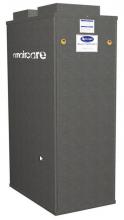 $5,240.00
- Covers 60,000 ft3 (provides 1 ACH)
- Variable speed switch
- Heavy VOCs
- 3 Sets of 16" Filters
-
- Covers 60,000 ft3 (provides 1 ACH)
- Variable speed switch
- Moderate VOCs
- 3 Sets of 16" Filters
-
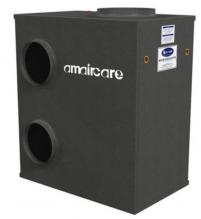 $3,469.00
- Covers 60,000 ft3 (provides 1 ACH)
- 1000 CFM
- 2 Sets of 16" Filters
- Comes without a cart
-
- Covers up to 2000 sq ft
- Excellent for Formaldehdyes & VOCs
- 23" high, 15" wide
- All steel
-
- Covers up to 2000 sq ft
- Not recommended for severe MCS
- 26 lb super enhanced impregnated activated carbon
-
- Covers up to 2000 sq ft
- Excellent for Formaldehdyes & VOCs
- 99.99% efficient at .1 micron
- All steel
-
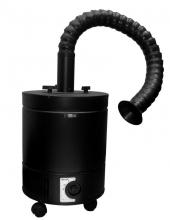 $1,429.98
- Great for nail salons
- Capture chemicals and odors
- Prevents toxins from becoming airborne
- UV Lamp optional
-
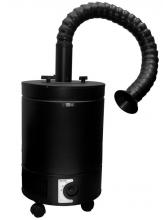 $1,529.98
- Great for nail salons
- Capture chemicals and odors
- Prevents toxins from becoming airborne
- UV Lamp optional
-
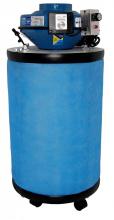 $2,759.98
- 30 lbs (20CC) of activate carbon
- Industrial-grade
- 10 micron adhesive capturing pre-filter
- 785 CFM (Free Flowing)
-
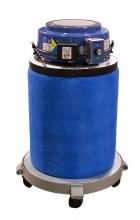 $5,159.98
- 60 lbs (24CC) of activated carbon
- Industrial-grade
- 10 micron adhesive capturing pre-filter
- 1000 CFM (Free Flowing)
-
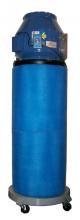 $7,198.98
- 120 lbs (48CC) of activated carbon
- Industrial-grade
- 10 micron adhesive capturing pre-filter
- 1000 CFM (Free Flowing)
-
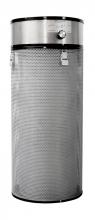 $2,039.98
- 30 lbs of carbon
- Micro-HEPA wrap
- Free Flow CFM 420
- Dimensions: 29" x 12"
-
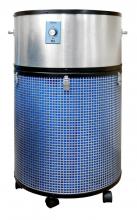 $5,519.98
- 2000 CFM (Free Flowing)
- 60 lbs of carbon
- Micro-HEPA wrap
- 900-1600 CFM (Delivered)
-
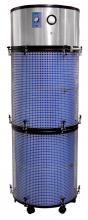 $8,039.98
- 120 lbs of carbon
- Micro-HEPA wrap
- 2000 Free Flow CFM
- Dimensions: 62" x 22"
-
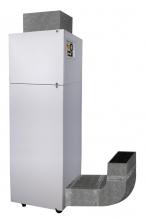 $8,296.00
- 750 to 1000 CFM (Free Flowing)
- Dimensions: 70" x 24.5" x 21"
- Dust and particle pre-filter
- 12" deep medical-grade HEPA filter
-
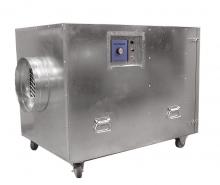 $4,399.98
- Fume extractor
- Industrial Carbon Configuration
- Dimensions: 37" x 26" x 26"
- 2000 CFM (Free Flowing)
-
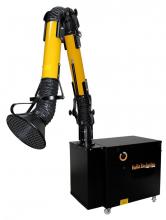 $3,950.98
- 40 lb carbon filter
- 2" HEPA
- Dimensions: 22.5" x 16" x 29"
- Excellent Source Capture
-
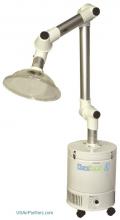 $1,799.98
- 18-27 lbs of Vocarb carbon
- Low noise level
- 23.5" high, 15" wide
- Micro HEPA wrap
Choosing the Right Air Purifier for VOCs and Chemical Sensitivities
Volatile organic compounds (VOCs) are gases released from everyday sources -- paint, cleaning products, furniture, building materials, and personal care products are common culprits. For most people, VOC exposure is a minor irritant. For those with heightened chemical sensitivity or MCS, even low levels can trigger real symptoms, which is why filtration technology and unit sizing matter more here than in a typical air purifier purchase.
Why Carbon Filtration Matters for VOC and Odor Reduction
Activated carbon is the workhorse for VOC and odor reduction. Rather than trapping particles like a HEPA filter does, activated carbon adsorbs gas molecules onto its surface as air passes through -- the more carbon in the unit, the more VOCs and odors it can adsorb. Units built for heavy VOC loads typically use a larger carbon bed, which is one reason we often recommend carbon-focused models for chemical sensitivity -- whether that's a sensitivity to household chemicals, perfumes and fragrances, or general VOCs -- rather than general-purpose units with a thin carbon layer.
For general chemical sensitivity, some models also pair carbon with TiO2 (titanium dioxide) to help address certain gases and odors. For MCS clients, though, we usually recommend keeping things simpler -- TiO2 itself can carry a faint odor that's noticeable to someone with heightened sensitivity, so we typically stick with carbon alone rather than adding more layers.
How Much Airflow Do You Need?
Air changes per hour (ACH) is a useful way to think about how thoroughly a unit filters the air in a room, and CFM (cubic feet per minute) tells you how much air a unit is moving. Some experts recommend 10+ ACH for maximum VOC and odor reduction, but that's not realistic in every home -- many customers are quite happy with results at 2+ ACH, and any level of filtration is better than none. That said, very low ACH may mean the unit's effect is less noticeable, even though it's still working.
One common mistake is oversizing: running a unit that's too large for the room, or running it on too high a speed, can actually be less effective (and noisier) than a properly sized unit running comfortably on a lower speed. If you let us know your room dimensions, we can help you land on the right size.
A Note for MCS Customers
Because chemical sensitivity is so individual, AllerAir -- one of the brands we carry for MCS -- offers an MCS test kit that lets you sample different types of carbon to find the one that best relieves your symptoms before committing to a full unit. Since MCS units from AllerAir are custom-made to order, they are not eligible for return once built, which is why we recommend starting with the test kit to help ensure the right carbon is chosen from the start.
A note for MCS clients: Finding the right fit is more nuanced for MCS than for general chemical sensitivity. The carbon needs to be strong enough to address what you're reacting to, but gentle enough that the carbon itself doesn't cause a reaction -- and that balance depends on both the amount and type of carbon used. Because everyone's sensitivities are different, this sometimes involves an element of trial and error, which is exactly why we recommend starting with the AllerAir MCS test kit rather than guessing.
If you already know what specific chemicals or compounds you're sensitive to, let us know -- we're glad to help match you with the right option rather than guessing.
What About UV?
UV light is a great tool for addressing germs and mold, and it's also what powers TiO2 filtration. But UV isn't always well-tolerated by MCS clients, which is part of why we don't typically recommend TiO2-based units for MCS -- carbon-focused filtration is usually the better starting point.
If pet odor is also something you're dealing with (like us!), take a look at our pet air purifiers page -- it covers odor control along with dander and particulate filtration.
FAQ
Can an air purifier completely eliminate VOCs from my home?
No air purifier can fully eliminate VOCs -- reduction depends on the concentration of VOCs, how quickly they're entering the space, airflow, and how many air changes per hour the unit provides. A properly sized carbon-based unit can meaningfully reduce VOC levels and odors, though.
What's the difference between carbon and TiO2 for chemical sensitivity?
Activated carbon adsorbs VOC and odor molecules onto its surface, while TiO2 works alongside carbon in some units to help address specific gases. The right combination depends on what you're sensitive to.
Is there a way to test which type of carbon works best for my sensitivities?
Yes -- AllerAir offers an MCS test kit that lets you try different carbon types before ordering a custom unit, since AllerAir's MCS units are not returnable once built.