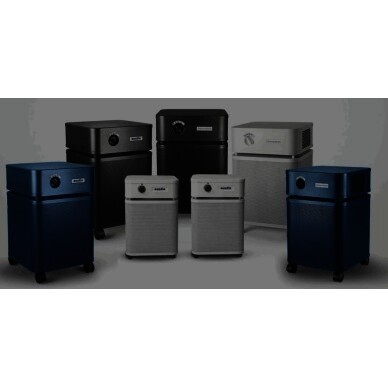
Please see the following letter written by an Environmental Specialist Engineer sent to Austin Air regarding UV lamps and HEPA filtration.
To whom it may concern,
This report demonstrates the reason Austin Air does not utilize UV light as a component in the design of their portable air cleaner:
Ultraviolet light (UVC wavelength) can disinfect if properly used. UVC bulbs are many times more powerful than outside sunlight.
- Ultraviolet (UVC) light efficiency requires proper dosage (intensity of UVC x exposure time). To disinfect microorganisms with UV light the air speed must be slow enough and there must be sufficient number of bulbs.
- The bulbs radiation output diminishes with time and may fail prematurely. The output of bulbs should be continuously monitored to ensure effectiveness and when to change the bulbs. This will also increase costs an potential repair problems.
- They should have metal reflectors for more uniform coverage.
- Since UVC is high intensity it can deteriorate plastics, wiring, filter materials and other non-metallics. Chemical by-products may also be produced including unstable free-radicals. Surfaces exposed to light must designed to prevent damage to construction materials and not exposure us to this light (except far UVC bulbs).
- Adding UV lights would increase both initial and maintenance costs. The delicate bulbs must be handled carefully and not be touched with bare hands.
- HEPA filters are designed to remove airborne particles, especially the hardest to remove 0.3 micron size particles (see 99.97% DOP testing) and not to release trapped microorganisms.
In my opinion, adding UV lights to HEPA air purifiers would not be warranted.