Airpura G400DLX Air Purifier: Low Odor German Carbon for MCS
Model: G400DLX
SKU: arp-ap-us1706
CARB Certified: Approved for sale to California
Zoom InCarb
Free Shipping
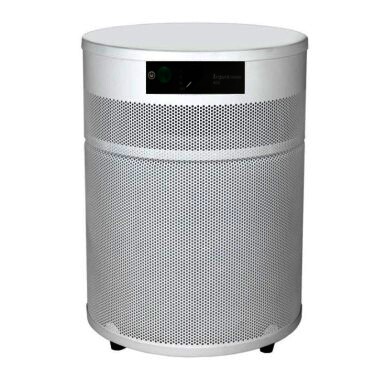
The Airpura G400DLX Chemically Sensitive air purifier covers up to 1,000 sq ft (depending on model and speed) and is an ideal air purifier for the typical home, office, or workshop. This high-quality air purifier focuses on VOCs, gases, and odors. It features est. 12 lbs of German carbon that has little to no odor and is ideal for our more sensitive clients while still offering optimal filtration. Cotton pre-filters are available upon request. It’s similar to the G400, but with a larger German carbon canister and a HEPA Barrier for our most sensitive clients, such as those with MCS.
If you loved the larger G700DLX, then you will love the newer G400DLX model designed for smaller spaces.
Airpura G400DLX: The Most German Carbon in a 400 for Chemically Sensitive Clients
The Airpura G400DLX is made for chemically sensitive clients, including people with Multiple Chemical Sensitivities (MCS), who want as much low odor carbon as a compact unit can hold. Inside its all-metal housing, an est. 12 lbs of Airpura’s German carbon, a proprietary blend with little to no odor of its own, sits behind a pre-filter (cotton on request), with a HEPA Barrier as the final stage. It focuses on VOCs, gases and odors in the typical home, office or workshop. It’s rated for up to 1,000 sq. ft. at about 2 air changes per hour (ACH) on high, and it stays quiet, at 32 dB on low.
Each G unit comes with a standard polyester pre-filter. An organic cotton pre-filter is available at no additional cost: just note it in the comment field when you order, and we’ll be happy to configure your unit for your needs.
Why German Carbon?
Many sensitive clients react to the carbon in an ordinary air purifier, especially while it’s new. Airpura’s German carbon is activated carbon treated with oxygen and specially formulated for the MCS sufferer. It adsorbs and holds odors, toxins and a broad range of chemical pollutants while giving off little to no odor itself.
Low to no odor
Dustless composition
Inert and safe to handle and use
pH: 3–10
Kosher and Halal certified
Every client’s sensitivities are different, so if you’re unsure whether the G400DLX will work for you, please reach out before you order.
G400DLX vs. G400 & G414
The G400DLX is similar to the Airpura G400 & G414, but its German carbon canister is bigger, holding an est. 12 lbs instead of an est. 8 lbs. It also uses a HEPA Barrier, which captures 95% of particles at 1 micron, in place of the G400’s True HEPA or the G414’s H14 Super HEPA. That leaves more of the unit for carbon, so the G400DLX is stronger for VOCs, odors and gases, while the G400 and G414 make more sense if fine particles are as big a concern as chemicals. For our most sensitive clients, such as those with MCS, the G400DLX pairs the most German carbon in the 400 series with a HEPA Barrier.
What About Formaldehyde?
Airpura updated its German carbon formula, and it now handles formaldehyde as well. For formaldehyde above all, the Airpura S400DLX and its SuperGas carbon are stronger, though some chemically sensitive clients tolerate German carbon better. Not sure which fits you? Contact us, and we’ll help you compare.
Sizing Your G400DLX
With 8-foot ceilings, the G400DLX provides about 2 air changes per hour across 1,000 sq. ft. on high. The number you need depends on you: your sensitivities, what’s off-gassing, how quickly it’s coming in and how much filtration you want. Rules of thumb vary widely. Allergy and asthma clients often aim for 3–7 ACH, and heavy VOC or smoke areas may even call for 10–12 ACH. Either way, the goal is a unit that cleans the air faster than the source adds to it.
If a small room needs high air changes, two 400-series units or a 600 model are better choices than one 700-series unit, which can draw its own clean air back in. Try our Air Changes per Hour Calculator, or contact us by email, and we’ll work it out with you. For larger spaces, see the Airpura G700DLX.
Choosing a Fan Speed
Although low gives the German carbon the longest dwell time, so it has more chance to adsorb VOCs and odors, high delivers the G400DLX’s most air changes per hour. Deciding which one matters more depends on the situation: for VOCs, odors, gases and chemicals, slower speeds are preferred, while particles usually do better with more air changes. The right setting also depends on how strong the source is and how quickly it’s entering your space. The G400DLX should run at least slightly faster than the source, and as slowly as you can while it stays ahead. For most clients, that means medium or low. Often, medium is the sweet spot, balancing air changes with dwell time. For VOCs and odors, size the G400DLX on medium speed, so you have room to turn it up when the source gets stronger.
Whole Home Option
A whole home version, the G700-W in black, is also available. It’s installed by a qualified installer; contact us for pricing. Whole home units take their own filter sizes, so email us for those filters and we’ll send a separate invoice.
Choosing an Airpura? Our Airpura Buyer’s Guide tab explains what sets Airpura apart, how to read the model names and how the carbon canisters and filters fit together.
At a Glance
Coverage: Up to 1,000 sq. ft. at about 2 ACH on high (8-ft ceilings)
Carbon: Est. 12 lbs proprietary German carbon, low to no odor
Particle filtration: HEPA Barrier, 95% at 1 micron (not a medical-grade HEPA)
Pre-filter: Polyester (organic cotton at no additional cost); 361 sq. in. x 1" deep
Delivered airflow: Est. 30 CFM on low, 150 on medium and 230 on high
Fan speed: 3-speed (low, medium, high)
Sound: 32 dB on low, 52 dB on high (typical room level is 30 dB)
Size: 15.5" H x 12" W
Housing: All metal with a powder-coated finish, in white or black (other colors on request); neoprene gaskets (felt available on request)
Certifications: ETL certified; CARB certified
Warranty: 5 years parts and 10 years labor (residential); 2 years parts and 5 years labor (industrial/commercial)
Made in: Canada
Estimated Maintenance
Filter
Service Interval
Pre-filter (standard or cotton)
Check every 3–6 months; change every 6–12 months. If you vacuum it, vacuum lightly, since a strong vacuum can pull out the fibers.
German carbon filter
Up to 2 years, depending on usage and contaminants
HEPA Barrier
Up to 1 year, depending on usage and contaminants
UV lamp
N/A (not used on DLX models)
Note: Filter maintenance is based on standard usage and average contaminants. Depending on your situation, filters may need to be changed more or less often.
Specifications
For chemically sensitive clients dealing with VOCs, gases and odors, the Airpura G400DLX combines an est. 12 lbs of low odor German carbon with a HEPA Barrier in a small, all-metal cabinet.
Coverage and Use
Coverage: Up to 1,000 sq. ft. at about 2 air changes per hour (ACH), 8-ft ceilings, on high
Usage: VOCs, gases and odors for chemically sensitive clients, plus larger particles
Filtration
Pre-filter: Standard polyester; organic cotton available at no additional cost (note it in the comment field when you order); 361 sq. in. x 1" deep
Carbon: Est. 12 lbs proprietary German carbon blend: oxygen-treated and specially formulated for MCS; low to no odor; dustless; inert and safe to handle and use; pH 3–10; Kosher and Halal certified
HEPA Barrier: 95% effective at 1 micron (not a medical-grade HEPA)
Gaskets: Neoprene; felt available on request (custom made for the unit, so it may lengthen ship time)
Delivered CFM (post-filters): Est. 30 CFM on low, 150 CFM on medium and 230 CFM on high; delivered CFM varies with the setup and filters
Fan speed: 3-speed (low, medium, high)
Sound level: 32 dB on low, 52 dB on high (typical room level is 30 dB)
Power
Voltage: 120 V
Power: 69 watts max, 0.6 A
Build, Certifications and Warranty
Size: 15.5" H x 12" W
Unit Weight: 26 lbs
Housing: All metal with a powder-coated finish
Colors: Standard colors are white and black; however, we also have specialty colors such as Champagne Mist and Soft Silver for an additional charge; just email us.
Casters: Not available
ETL certified: Conforms to CSA C22.2 No. 113 and ANSI/UL 507
CARB certified: Approved for sale in California
Warranty, residential: 5 years parts, 10 years labor
Warranty, industrial/commercial: 2 years parts, 5 years labor
Made in: Canada
Air changes depend on your space and your sensitivities, and heavy VOC or smoke areas may even call for 10–12 ACH. For VOCs and odors, figure your coverage on medium speed. Try our Air Changes per Hour Calculator, or contact us by email, and we’ll help.
If the G700DLX is too large for your space, the G400DLX is an excellent option.
Ideal for:
Families who want healthier air but are chemically sensitive to standard carbons
Chemically sensitive clients who want no glues and no carbon odor and need to reduce as many VOCs as possible
Individuals prone to allergies and breathing problems who are sensitive to many carbons
Workplace and industrial use where employees are sensitive to many carbons
Fitness centers where clients may be sensitive to most carbons
Nursing homes where residents may be sensitive to most carbons
Sensitive clients who want the most carbon with little to no odor, plus a HEPA Barrier
Sensitive clients concerned about formaldehyde. The S400DLX is stronger for formaldehyde, but some clients tolerate the G400DLX better.
These are just some of the uses for this unit. Many contaminants are a good fit for more than one unit, so if you’d like help finding the best one for your needs, please contact us.
Many factors come into play when choosing an air purifier, including the contaminants, coverage (enough air changes for the level of off-gassing), how quickly things are off-gassing, particulate matter, and your own sensitivities. The uses above are suggestions. Air purification isn’t a black-and-white science, and things outside our control, like humidity or where the unit is placed, affect results. We wish there were one unit for every need, but there are always trade-offs, like sound versus power and budget versus filtration.
Don’t hesitate to ask, especially if your contaminant levels are high.
Airpura Buyer’s Guide
Unique Features That Make Airpura Different from Many Air Purifier Companies
Airpura air purifiers are built differently from many units on the market, with a focus on clean construction, deep filtration you can customize, and long-term durability. This guide covers what sets Airpura apart, how to read Airpura model names and how the carbon canisters and filters fit together, so you can choose the right unit or change it later.
Clean Construction
All-metal housing: Powder-coated steel instead of plastic, so no plastic vapors are emitted.
Motor out of the airflow: Many air purifiers blow the clean air over the motor, where it can pick up impurities. Airpura keeps the motor out of the airflow.
Electrical parts in a sealed chamber: Kept away from the airflow, which increases safety and prevents off-gassing.
Pressure-sealed filter chamber: Airpura’s unique pressure seal keeps air from slipping around the filters, so it passes through them.
Neoprene gaskets: Seal the filter chamber, with felt available on request (custom made for the unit, so it may lengthen ship time).
Deep, Customizable Filtration
Deep activated carbon beds: Up to an estimated 40 lbs of activated carbon, depending on model, with airflow and bed depth calibrated for proper contact time.
Carbon options: On carbon models, the standard carbon can be swapped for V, F, S or anthracite carbon for an additional charge, to target specific chemicals.
HEPA options: True HEPA or HEPA Barrier, depending on the model; H14 SuperHEPA on the 414, 614 and 714 models; and a 100 sq. ft. True HEPA on the I series, the largest HEPA in the Airpura line.
UV and PCO options: UV germicidal lamps on the UV series, TitanClean photocatalytic oxidation with UV on the P series, and a UV upgrade on the I series.
Power and Control
Delivered airflow (after the filters): Estimated from low to high. Delivered airflow can vary slightly with each filter configuration. At the higher end are the I600 PLUS and I700 PLUS, which move more air since they have no carbon bed.
400 series: 30–240 CFM (230–240 CFM on high, depending on model)
600 series: 80–430 CFM (360–430 CFM on high, depending on model)
700 series: 88–450 CFM (400–450 CFM on high, depending on model)
900 series: 600–650 CFM on high (depending on model)
Speed control: Three speeds on the 400 series and variable speed on the 600, 700 and 900 series.
Superior dwell time: The integrated impeller/motor, speed control and unimpeded airflow let you set the airflow precisely, so the air gets the time it needs with the filters.
Built to Last
Warranty on residential units: 5 years parts and 10 years labor.
Warranty on industrial/commercial units: 2 years parts and 5 years labor.
Made in: Canada.
Whole home options: Most models can be made into whole home units for your HVAC system, installed by a qualified installer. Popular choices include the R, V, UV, P, C and I models; the exceptions are the H14 SuperHEPA models and the P PLUS models, since there’s no SuperHEPA or PLUS HEPA for whole home units.
Clean, modern appearance: Fits in any decor.
How to Read Airpura Model Names
Every Airpura model name tells you what’s inside. The S614, for example, has SuperGas carbon (S), the 6-series motor (6) and an H14 SuperHEPA (14).
The letter, for the carbon: From the gentlest to the strongest chemical filtration:
G: German carbon, a proprietary blend treated with oxygen, often chosen by chemically sensitive clients.
R: Coconut shell carbon, the all-purpose base unit.
V: Carbon impregnated with potassium iodide, for VOCs and specific chemicals.
F: Carbon impregnated with potassium permanganate, for formaldehyde and VOCs.
S: SuperGas, Airpura’s proprietary hybrid of the V and F carbons, for the widest realm of VOCs plus formaldehyde.
C, T and DLX, for heavier chemical loads: A larger carbon bed, with a HEPA-Barrier in place of the True HEPA. The T adds a Tar-Barrier pre-filter for tobacco smoke.
UV and P, for UV technology: UV adds a germicidal UV lamp, and P adds UV with TitanClean PCO. P PLUS models also have a TiO2-coated HEPA that works with the PCO.
I, for the largest HEPA: The I600 PLUS and I700 PLUS have an extra-large 100 sq. ft. HEPA, the largest in the Airpura line.
The number, for the motor: 4, 6, 7 or 9, for the 400, 600, 700 or 900 series.
The last two digits, for the particle filter: 00 for a medical-grade True HEPA, or 14 for the H14 SuperHEPA. On the C, T and DLX models, 00 means the HEPA-Barrier instead, and on the 900 series, a MERV-13 particle filter.
-W, for whole home: A whole home unit for your HVAC system, installed by a qualified installer.
900 and 900 MAX: Industrial source-capture units; the MAX holds two of each filter.
Carbon Canisters and Changing Configurations
Carbon canisters: Each canister size goes with its own particle filter. On the 600 and 700 series, the est. 18 lb, 2″ deep canister goes with a medical-grade True HEPA or the H14 SuperHEPA, and the est. 26 lb, 3″ deep canister goes with the HEPA-Barrier (DLX, C and T models). The 400 series uses est. 8 lbs on most models and est. 12 lbs on the C, T and DLX.
Swapping carbon: You can swap in another type of carbon in the same size. Weights are for the base carbon, so the manufacturer’s site may list slightly different figures for each blend.
Changing configurations: If your needs change, the carbon and HEPA can be changed out together to make another configuration. On the 600 and 700 series, a unit without UV can switch to any other setup without UV, using the 18 lb or the 26 lb carbon. A unit with UV technology, whether it’s a UV, P or I unit, stays with UV, and the larger 26 lb carbon bed won’t fit in it, so it uses the 18 lb carbon or the I-HEPA. Whole home units work the same way within the whole home family.
Download the Airpura Activated Carbon Adsorption Ratings (PDF) – These ratings are for standard activated carbon against common chemicals and VOCs, and not every tested compound is listed. The G400DLX uses Airpura’s proprietary German carbon blend, so if you have a specific chemical in mind, contact us, and we’ll check with Airpura’s chemist.
Download the Airpura KCL Test Report (PDF) – Testing was performed on the Airpura 600 series with standard activated carbon.
Estimated Maintenance
Filter
Service Interval
Standard pre-filter
Typically every 6–12 months, depending on use. If you vacuum it, vacuum lightly, since a strong vacuum can pull out the fibers.
TarBarrier pre-filter
About monthly in public places; less often in homes, depending on how much smoking takes place
Carbon filter
Up to 2 years, depending on usage and contaminants
HEPA-Barrier
Every time the TarBarrier is changed in public places; typically every 12 months in homes
HEPA or SuperHEPA
2–5 years max, depending on usage and contaminants
UV lamp
Not applicable
Note: Filter maintenance is based on standard usage and average contaminants. Depending on your situation, filters may need to be changed more or less often.


 Free Shipping
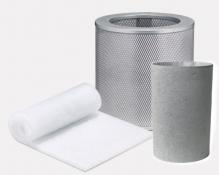
Airpura G400DLX Filter Bundle: 400 Prefilter, G-DLX Carbon, HEPA Barrier with Frame
$409.94 $329.98
 Free Shipping
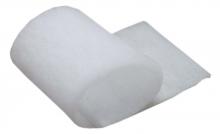
Airpura 400 Prefilter -2 pack: FITS 400 Series
Starting at $44.98
 Free Shipping
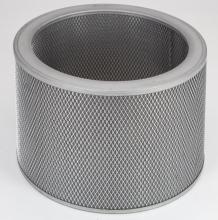
Airpura Carbon Filter G400DLX German Blend Carbon
$299.98
 Free Shipping
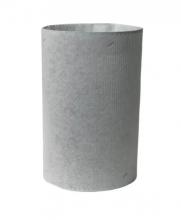
Airpura HEPA Barrier Filter Fits C400 C40DLX T400 T400DLX G400DLX F400DLX S400DLX with Frame
$79.98 $69.98
 Free Shipping
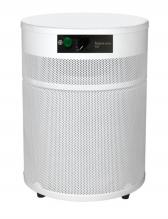
Airpura G400 & G414 Air Purifier for Chemical Sensitivity: German Carbon
Starting at $709.98
 Free Shipping
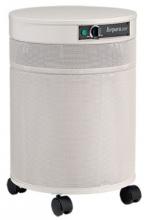
Airpura G700DLX Air Purifier for MCS: Maximum German Carbon, More Power
Starting at $1,299.98