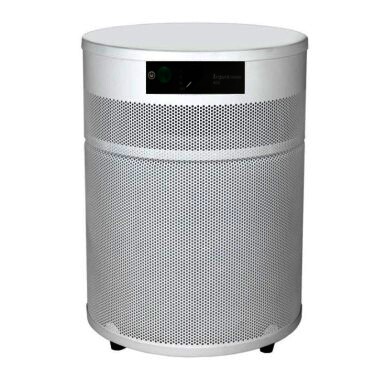
Airpura C400 Air Purifier: Airborne Chemicals, Gases & Odors
Model: C400
SKU: arp-ap-us1707
CARB Certified: Approved for sale to California
Zoom InCarb
Free Shipping
The Airpura C400 air purifier covers up to 1,000 sq ft (depending on model and speed) and is the perfect choice for over 4,000 heavy airborne chemicals like ammonia, mold mycotoxins, toluene and more. Its extra large carbon bed is made for maximum chemical adsorption, with superior airflow and dwell time in a small, compact unit.
Featuring est. 12 lbs of activated carbon plus a HEPA Barrier (not a medical grade HEPA).
If you loved the larger C700, then you will love the newer C400 model designed for smaller spaces.
Airpura C400: A Compact Carbon Air Purifier for Chemicals, Gases and Odors
The Airpura C400 is a small, all-metal air purifier built around a deep bed of carbon. It holds an est. 12 lbs of activated carbon (100% coconut shell) to adsorb airborne chemicals, gases and odors, from ammonia, gasoline and toluene to mold mycotoxins, and it’s a strong pick for over 4,000 airborne chemicals and VOCs. A pre-filter and a HEPA Barrier take care of dust and larger particles. On high, it covers up to 1,000 sq. ft. at about 2 air changes per hour (ACH), and on low it’s a quiet 32 dB.
The C400 comes with a standard polyester pre-filter. An organic cotton pre-filter is available at no additional cost: just note it in the comment field when you order, and we’ll be happy to configure your unit for your needs.
More Carbon in the Same Small Footprint
The C400 is the same size as Airpura’s other 400-series units, just 15.5" high and 12" wide, but it holds an est. 12 lbs of carbon, compared with an est. 8 lbs in the R400, V400 and G400. The deeper bed gives the air more contact time with the carbon, and with three fan speeds, you can run it slower for more time in the carbon, or turn it up when chemical levels climb so it stays ahead of them.
Why a HEPA Barrier?
As on Airpura’s C, T and DLX models, the C400’s last stage is a HEPA Barrier rather than a medical-grade True HEPA. It captures 95% of particles at 1 micron, and using it leaves more of the unit for carbon. When chemicals, gases and odors are your main concern, that’s a good trade. If ultrafine particles matter just as much, a True HEPA model such as the Airpura R400 & R414 may suit you better.
C400 vs. C400DLX
The C400 and the Airpura C400DLX share the same compact housing, motor, pre-filter and HEPA Barrier, and both hold an est. 12 lbs of carbon. The carbon itself is the difference. The C400 uses standard activated carbon, a good fit for everyday chemicals, gases and odors. The C400DLX uses Airpura’s DLX blend, impregnated with potassium iodide, for heavier concentrations of chemicals and VOCs, like TCE, PCE, sulfur gases and highway exhaust.
Where Clients Use the C400
Clients often choose the C400 for spaces in or near old dry cleaners, where TCE and PCE may be present, and for salons with toluene and benzene. It also suits gasoline odors, artists working with oil and acrylic paints, lubricant fumes in machine shops, and shoe repair or UV printing shops, along with homes and workplaces near industries that release chemicals. You’ll find more uses on the Ideal For tab.
Sizing Your C400
In a 1,000 sq. ft. room with 8-foot ceilings, the C400 gives you about 2 air changes per hour on high. The right number for you depends on your space and your goals, and there are plenty of rules of thumb: clients with allergies or asthma often look for 3–7 ACH, and heavy VOC or smoke areas may even call for 10–12 ACH. It also depends on what the contaminant is, how much of it there is, how fast it’s coming in and your own sensitivities. Above all, the C400 has to clean the air faster than new chemicals come in.
For high air changes in a small room, add a second 400-series unit or choose a 600 model instead of one 700-series unit, which can draw its own clean air back in. Our Air Changes per Hour Calculator can help, or contact us by email, and we’ll help you size it. For larger spaces, take a look at the Airpura C700.
Low, Medium or High?
Dwell time is how long the air spends in the carbon, and the longer it is, the more the carbon can adsorb on each pass. Although low speed offers the longest dwell time, high speed offers the most air changes per hour. Determining which matters more depends on the situation. With chemicals, VOCs, gases and odors, slower speeds are preferred, because you want the longest dwell time possible, while particles usually call for more air changes per hour. We still recommend running the C400 at least slightly faster than chemicals are coming into your space, so it gets ahead of them, yet as slowly as it can while it stays ahead. Where that falls depends on how heavy the chemicals are and how fast they’re coming in, and it’s usually medium or low. Often, medium is the sweet spot, because it balances air changes with dwell time. When chemicals are your main concern, size the C400 on medium speed, which leaves room to turn it up if the chemicals get heavier.
Choosing an Airpura? Our Airpura Buyer’s Guide tab explains what sets Airpura apart, how to read the model names and how the carbon canisters and filters fit together.
At a Glance
Coverage: Up to 1,000 sq. ft. at about 2 ACH on high (8-ft ceilings)
Carbon: Est. 12 lbs activated carbon (100% coconut shell)
Particle filtration: HEPA Barrier, 95% at 1 micron (not a medical-grade HEPA)
Pre-filter: Polyester (organic cotton at no additional cost); 361 sq. in. x 1″ deep
Delivered airflow: Est. 30 CFM on low, 150 on medium and 230 on high
Fan speed: 3-speed (low, medium, high)
Sound: 32 dB on low, 52 dB on high (typical room level is 30 dB)
Size: 15.5" H x 12" W
Housing: All metal with a powder-coated finish, in white or black (other colors on request); neoprene gaskets (felt available on request)
Certifications: ETL certified; CARB certified
Warranty: 5 years parts and 10 years labor (residential); 2 years parts and 5 years labor (industrial/commercial)
Made in: Canada
Estimated Maintenance
Filter
Service Interval
Pre-filter
Check every 3–6 months; change every 6–12 months. If you vacuum it, vacuum lightly, since a strong vacuum can pull out the fibers.
Carbon filter
Up to 2 years, depending on usage and contaminants
HEPA Barrier
Typically every 12 months (some clients go 18–24 months), depending on usage
Note: Filter maintenance is based on standard usage and average contaminants. Depending on your situation, filters may need to be changed more or less often.
Specifications
Built for airborne chemicals, gases and odors in smaller spaces, the Airpura C400 puts an est. 12 lb bed of activated carbon and a HEPA Barrier inside Airpura’s compact all-metal 400 housing.
Coverage and Use
Coverage: Up to 1,000 sq. ft. at about 2 air changes per hour (ACH), 8-ft ceilings, on high
Usage: Airborne chemicals, VOCs, gases and odors, plus larger particles
Filtration
Pre-filter: Standard polyester; organic cotton available at no additional cost (note it in the comment field when you order); 361 sq. in. x 1″ deep
Carbon: Est. 12 lbs activated carbon, 100% coconut shell
HEPA Barrier: 95% effective at 1 micron (not a medical-grade HEPA)
Gaskets: Neoprene; felt available on request (custom made for the unit, so it may lengthen ship time)
Delivered CFM (post-filters): Est. 30 CFM on low, 150 CFM on medium and 230 CFM on high; delivered CFM varies with the setup and filters
Fan speed: 3-speed (low, medium, high)
Sound level: 32 dB on low, 52 dB on high (typical room level is 30 dB)
Power
Voltage: 120 V
Power: 69 watts max, 0.6 A
Build, Certifications and Warranty
Size: 15.5" H x 12" W
Unit Weight: 26 lbs
Housing: All metal with a powder-coated finish
Colors: Standard colors are white and black; however, we also have specialty colors such as Champagne Mist and Soft Silver for an additional charge; just email us.
Casters: Not available
ETL certified: Conforms to CSA C22.2 No. 113 and ANSI/UL 507
CARB certified: Approved for sale in California
Warranty, residential: 5 years parts, 10 years labor
Warranty, industrial/commercial: 2 years parts, 5 years labor
Made in: Canada
Not sure how many air changes you need? Every space is different, and heavy VOC or smoke areas may even call for 10–12 ACH. For chemicals, calculate on medium speed. Our Air Changes per Hour Calculator can help, or contact us by email.
If the C700 is too large for your space, the C400 is an excellent option.
Ideal for smaller spaces with:
Old dry cleaners, where TCE and PCE may be present
Salons with toluene and benzene
Gasoline VOCs and odors
Artists working with oil and acrylic paints
Lubricant fumes from machine shops
Shoe repair shops and UV printers
Homes or workplaces near industries that release chemicals
Families who want cleaner, healthier air at home
Places with poor outdoor air quality
These are just some of the uses for this unit. Many contaminants are a good fit for more than one unit, so if you’d like help finding the best one for your needs, please contact us.
Many factors come into play when choosing an air purifier, including the contaminants, coverage (enough air changes for the level of off-gassing), how quickly things are off-gassing, particulate matter, and your own sensitivities. The uses above are suggestions. Air purification isn’t a black-and-white science, and things outside our control, like humidity or where the unit is placed, affect results. We wish there were one unit for every need, but there are always trade-offs, like sound versus power and budget versus filtration.
Don’t hesitate to ask, especially if your contaminant levels are high.
Airpura Buyer’s Guide
Unique Features That Make Airpura Different from Many Air Purifier Companies
Airpura air purifiers are built differently from many units on the market, with a focus on clean construction, deep filtration you can customize, and long-term durability. This guide covers what sets Airpura apart, how to read Airpura model names and how the carbon canisters and filters fit together, so you can choose the right unit or change it later.
Clean Construction
All-metal housing: Powder-coated steel instead of plastic, so no plastic vapors are emitted.
Motor out of the airflow: Many air purifiers blow the clean air over the motor, where it can pick up impurities. Airpura keeps the motor out of the airflow.
Electrical parts in a sealed chamber: Kept away from the airflow, which increases safety and prevents off-gassing.
Pressure-sealed filter chamber: Airpura’s unique pressure seal keeps air from slipping around the filters, so it passes through them.
Neoprene gaskets: Seal the filter chamber, with felt available on request (custom made for the unit, so it may lengthen ship time).
Deep, Customizable Filtration
Deep activated carbon beds: Up to an estimated 40 lbs of activated carbon, depending on model, with airflow and bed depth calibrated for proper contact time.
Carbon options: On carbon models, the standard carbon can be swapped for V, F, S or anthracite carbon for an additional charge, to target specific chemicals.
HEPA options: True HEPA or HEPA Barrier, depending on the model; H14 SuperHEPA on the 414, 614 and 714 models; and a 100 sq. ft. True HEPA on the I series, the largest HEPA in the Airpura line.
UV and PCO options: UV germicidal lamps on the UV series, TitanClean photocatalytic oxidation with UV on the P series, and a UV upgrade on the I series.
Power and Control
Delivered airflow (after the filters): Estimated from low to high. Delivered airflow can vary slightly with each filter configuration. At the higher end are the I600 PLUS and I700 PLUS, which move more air since they have no carbon bed.
400 series: 30–240 CFM (230–240 CFM on high, depending on model)
600 series: 80–430 CFM (360–430 CFM on high, depending on model)
700 series: 88–450 CFM (400–450 CFM on high, depending on model)
900 series: 600–650 CFM on high (depending on model)
Speed control: Three speeds on the 400 series and variable speed on the 600, 700 and 900 series.
Superior dwell time: The integrated impeller/motor, speed control and unimpeded airflow let you set the airflow precisely, so the air gets the time it needs with the filters.
Built to Last
Warranty on residential units: 5 years parts and 10 years labor.
Warranty on industrial/commercial units: 2 years parts and 5 years labor.
Made in: Canada.
Whole home options: Most models can be made into whole home units for your HVAC system, installed by a qualified installer. Popular choices include the R, V, UV, P, C and I models; the exceptions are the H14 SuperHEPA models and the P PLUS models, since there’s no SuperHEPA or PLUS HEPA for whole home units.
Clean, modern appearance: Fits in any decor.
How to Read Airpura Model Names
Every Airpura model name tells you what’s inside. The S614, for example, has SuperGas carbon (S), the 6-series motor (6) and an H14 SuperHEPA (14).
The letter, for the carbon: From the gentlest to the strongest chemical filtration:
G: German carbon, a proprietary blend treated with oxygen, often chosen by chemically sensitive clients.
R: Coconut shell carbon, the all-purpose base unit.
V: Carbon impregnated with potassium iodide, for VOCs and specific chemicals.
F: Carbon impregnated with potassium permanganate, for formaldehyde and VOCs.
S: SuperGas, Airpura’s proprietary hybrid of the V and F carbons, for the widest realm of VOCs plus formaldehyde.
C, T and DLX, for heavier chemical loads: A larger carbon bed, with a HEPA-Barrier in place of the True HEPA. The T adds a Tar-Barrier pre-filter for tobacco smoke.
UV and P, for UV technology: UV adds a germicidal UV lamp, and P adds UV with TitanClean PCO. P PLUS models also have a TiO2-coated HEPA that works with the PCO.
I, for the largest HEPA: The I600 PLUS and I700 PLUS have an extra-large 100 sq. ft. HEPA, the largest in the Airpura line.
The number, for the motor: 4, 6, 7 or 9, for the 400, 600, 700 or 900 series.
The last two digits, for the particle filter: 00 for a medical-grade True HEPA, or 14 for the H14 SuperHEPA. On the C, T and DLX models, 00 means the HEPA-Barrier instead, and on the 900 series, a MERV-13 particle filter.
-W, for whole home: A whole home unit for your HVAC system, installed by a qualified installer.
900 and 900 MAX: Industrial source-capture units; the MAX holds two of each filter.
Carbon Canisters and Changing Configurations
Carbon canisters: Each canister size goes with its own particle filter. On the 600 and 700 series, the est. 18 lb, 2″ deep canister goes with a medical-grade True HEPA or the H14 SuperHEPA, and the est. 26 lb, 3″ deep canister goes with the HEPA-Barrier (DLX, C and T models). The 400 series uses est. 8 lbs on most models and est. 12 lbs on the C, T and DLX.
Swapping carbon: You can swap in another type of carbon in the same size. Weights are for the base carbon, so the manufacturer’s site may list slightly different figures for each blend.
Changing configurations: If your needs change, the carbon and HEPA can be changed out together to make another configuration. On the 600 and 700 series, a unit without UV can switch to any other setup without UV, using the 18 lb or the 26 lb carbon. A unit with UV technology, whether it’s a UV, P or I unit, stays with UV, and the larger 26 lb carbon bed won’t fit in it, so it uses the 18 lb carbon or the I-HEPA. Whole home units work the same way within the whole home family.
Download the Airpura Activated Carbon Adsorption Ratings (PDF) – These ratings are for standard activated carbon, the type the C400 uses, against common chemicals and VOCs. Not every tested compound is listed, so if you have a specific chemical in mind, contact us and we’ll check with Airpura’s chemist. Units with impregnated carbon, like the C400DLX, rate higher.
Download the Airpura KCL Test Report (PDF) – Testing was performed on the Airpura 600 series with standard activated carbon.
Estimated Maintenance
Filter
Service Interval
Standard pre-filter
Typically every 6–12 months, depending on use. If you vacuum it, vacuum lightly, since a strong vacuum can pull out the fibers.
TarBarrier pre-filter
About monthly in public places; less often in homes, depending on how much smoking takes place
Carbon filter
Up to 2 years, depending on usage and contaminants
HEPA-Barrier
Every time the TarBarrier is changed in public places; typically every 12 months in homes
HEPA or SuperHEPA
2–5 years max, depending on usage and contaminants
UV lamp
Not applicable
Note: Filter maintenance is based on standard usage and average contaminants. Depending on your situation, filters may need to be changed more or less often.


 Free Shipping
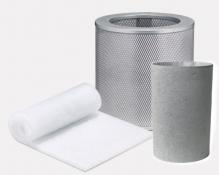
Airpura C400 Filter Bundle: 400 Prefilter, C-Carbon, HEPA Barrier with Frame
$349.94 $279.98
 Free Shipping
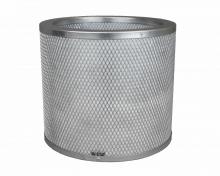
Airpura Carbon Filter C400 / T400
$239.98
 Free Shipping
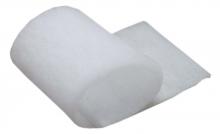
Airpura 400 Prefilter -2 pack: FITS 400 Series
Starting at $44.98
 Free Shipping
Airpura HEPA Barrier Filter Fits C400 C40DLX T400 T400DLX G400DLX F400DLX S400DLX with Frame
$79.98 $69.98
 Free Shipping
Airpura C400DLX Air Purifier: VOCs, Chemicals & Gases
$709.98
 Free Shipping
Airpura C700 Air Purifier: Chemicals & Gases for Large Rooms
Starting at $1,199.98