Home improvements basement insulation
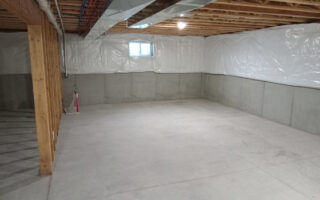
Basements can be dank, dark, dreary places. But that’s not just a vibe — these out-of-the-way parts of the home are also where mold is most likely to grow, and for good reason. This guide covers air purifiers for mold in basements specifically, not general HEPA shopping advice.
If you’re shopping for an air purifier for basement mold, it helps to understand why basements behave so differently from the rest of the house before you pick a unit. A basement air purifier is part of the solution — but without proper moisture control, it’s not going to control mold all by itself, no matter how good the unit is.
Mold Hazards
Mold can trigger allergies or worsen respiratory conditions in people who are sensitive to it. It also brings along musty smells and can damage building materials over time. Some strains are considered more hazardous than others, but for most of us, breathing in mold spores over an extended period isn’t something to shrug off.
That’s why basement owners want to catch mold early and stay ahead of it, rather than deal with an established colony later. An air purifier can help by reducing what’s floating in the air, but the real fix is removing the conditions that let mold grow in the first place — moisture, poor airflow, and something for it to feed on.
Basements deserve their own conversation here, separate from the rest of the house, because the conditions that drive mold growth show up there more consistently — and more severely — than almost anywhere else in a home.
High Humidity, Dampness, and Wetness
Let’s start with the obvious: basements are where water tends to end up.
Even with good gutters and grading, it’s common for water to find its way in during heavy rain or snowmelt — and a basement is usually the first place it shows up. On top of that, basements typically run more humid than the floors above, simply because they’re closer to the ground and slower to dry out.
That combination creates exactly the condition mold needs. It can start small: a little moisture that doesn’t dry out for a few days, a handful of spores taking hold nearby. Left alone, that colony grows and starts releasing more spores into the air.
Poor Ventilation
Basements tend to be poorly ventilated, too — and this is part of what separates a basement mold problem from an upstairs one.
Because they’re below grade, there’s rarely room for windows or exterior doors. And because people aren’t down there as often, those spaces stay closed up — they don’t get the regular “airing out” that upstairs rooms do. Without that air exchange, humidity has nowhere to go, and neither do the spores it produces.
Mold and the HVAC System
Here’s where it gets more complicated: a normally functioning HVAC system can end up spreading mold throughout the house, especially if the mold started in the basement.
If there’s a return vent down there, spores can travel through the ductwork and resettle in rooms throughout the house — following the moisture wherever it collects. What starts as a basement-only issue can quietly become a whole-house one. The longer this goes on, the harder it becomes to remediate.
Dehumidifiers help control the humidity feeding the problem in the first place. Air filtration handles what’s already airborne — here’s what that actually covers, and where its limits are.
Why Mold Needs Both HEPA and Carbon
Mold spores generally run 2 to 10 microns for the most common indoor species — the EPA’s full range for mold spores overall is 2 to 100 microns — which a properly rated HEPA filter captures without much trouble. The harder part is what mold releases along with those spores: the gases responsible for that telltale musty basement smell (known as MVOCs, or microbial volatile organic compounds, if you want the technical term), plus mycotoxins, some of which ride on particulates fine enough to slip past standard HEPA. Carbon handles the mycotoxins and the odor through adsorption; a SuperHEPA filter (rated to 0.1 micron, versus 0.3 micron for standard True HEPA) adds a finer capture layer for anyone who wants that extra margin.
UV is worth mentioning too. A germicidal UV lamp positioned in the airstream is effective against mold and other microorganisms, which is why some mold-rated units pair UV with HEPA and carbon rather than relying on filtration alone — useful in a basement especially, where ongoing humidity keeps microbial growth a recurring risk rather than a one-time event.
How Many Air Changes Do You Need?
This is where a lot of basement air purifier shopping goes wrong: people buy based on square footage alone and stop there.
With something like mold, more than 1 air change is necessary with heavy contaminants — a single pass through the filter can’t keep up with an active spore source. We generally guide clients toward 5+ air changes per hour (ACH) for a basement with an ongoing moisture issue, depending on square footage. Most residential setups won’t reach 10+ ACH, and that’s fine as long as the air changes you’re getting are enough for the contaminant load in that specific space.
Basements vary a lot in size — anywhere from a few hundred square feet in an older home to well over 1,500 in a finished walkout — so there’s no single “right” unit for every basement. When you’re not sure, it’s better to size up than down. A unit can always run on a lower fan speed, but it can never exceed its rated capacity. Sizing up also gets you a quieter low setting — useful if the basement doubles as a rec room or home office — and more dwell time for the carbon bed to work on musty odors.
What We Recommend for Basement Mold
The fundamentals of choosing the best air purifier for mold apply here too: real HEPA, real carbon, and UV if you want extra microbial protection. Basement mold usually comes with both spores and a musty smell, so you want a unit that handles both — and depending on how contaminated the space is, UV is worth considering too.
Standard HEPA + Carbon
- Austin Air Immune Machine — Austin’s most complete filtration system, combining medical-grade HEPA with HEGA carbon across 8 stages of protection. Covers up to 1,500 sq ft — good for small to mid-sized basements.
- Amaircare 3000 VOC — True HEPA paired with a VOC-focused carbon canister. Delivers 265 CFM through its filter media and covers up to 1,800 sq ft, enough for most finished basements. One thing worth noting: Amaircare places its carbon stage after the HEPA filter rather than before it, the reverse of how AllerAir, Airpura, and Austin Air are built. That’s why you’ll often see a lower carbon weight quoted for Amaircare units — it reflects a different stage order, not weaker filtration.
With UV, for Extra Microbial Control
- AllerAir Pro 5 MG Vocarb UV — Medical Grade True HEPA and a Vocarb carbon bed, plus a UV lamp specifically for added mold and germ protection. Covers up to 1,500 sq ft.
- Airpura UV700 — HEPA-Barrier filtration, a substantial carbon bed, and UV — the same combination Airpura recommends specifically for basements, along with hospitals and other high-risk mold environments. The UV714 configuration steps up to SuperHEPA, 99.99% effective to 0.1 micron. Covers up to 2,500 sq ft — our pick for larger or more heavily affected basements.
(Delivered CFM reflects actual airflow through the filter media, not fan-rated CFM. Only the Amaircare 3000 VOC has a confirmed delivered CFM figure on file — send over numbers for the other three if you want them quoted too.)
If you’re covering a larger or open basement layout, we’ll often recommend running two units together rather than one oversized machine — reach out and we can help you size it out.
For more on what to look for in a mold-fighting air purifier — CFM, UV, and the tradeoffs between them — we’ve covered that in more depth in Which Air Purifiers Are Best For Mold?
What an Air Purifier Cannot Do
Filtration only works on what’s suspended in the air. Once mold has taken hold on framing, drywall, or stored belongings, no amount of HEPA or carbon reaches it — that takes actual remediation and moisture control. Think of an air purifier as damage control for what’s already spreading through the basement, not a fix for the source itself.
To actually get ahead of basement mold, you need to find the affected areas, expose them to light, and restore dry conditions. In more serious cases, a professional will need to remove and replace contaminated materials. Once that’s done, running an air purifier is a great way to catch any residual spores still floating in the air while everything settles.
Looking for the right air purifier for mold? Browse our full lineup, or reach out and we’ll help you match a unit to your basement’s specific situation.
USAirPurifiers is a family and veteran-owned U.S. business offering a wide range of high-quality air purifiers, scrubbers, filters, air monitors and humidifiers. The Lulay Team knows that clean air isn’t one-size-fits-all, so we match the right solution to your needs and budget. Invest in your family’s health and breathe easier. Your health is truly our top priority because everyone deserves to enjoy clean air everywhere!
Tags: air purifier for basement mold, air purifiers for mold in basements, basement air purifier, HEPA air purifier basement mold