Unique Features That Make Airpura Different from Many Air Purifier Companies
Airpura air purifiers are built differently from many units on the market, with a focus on clean construction, deep filtration you can customize, and long-term durability. This guide covers what sets Airpura apart, how to read Airpura model names and how the carbon canisters and filters fit together, so you can choose the right unit or change it later.
Clean Construction
- All-metal housing: Powder-coated steel instead of plastic, so no plastic vapors are emitted.
- Motor out of the airflow: Many air purifiers blow the clean air over the motor, where it can pick up impurities. Airpura keeps the motor out of the airflow.
- Electrical parts in a sealed chamber: Kept away from the airflow, which increases safety and prevents off-gassing.
- Pressure-sealed filter chamber: Airpura’s unique pressure seal keeps air from slipping around the filters, so it passes through them.
- Neoprene gaskets: Seal the filter chamber, with felt available on request (custom made for the unit, so it may lengthen ship time).
Deep, Customizable Filtration
- Deep activated carbon beds: Up to an estimated 40 lbs of activated carbon, depending on model, with airflow and bed depth calibrated for proper contact time.
- Carbon options: On carbon models, the standard carbon can be swapped for V, F, S or anthracite carbon for an additional charge, to target specific chemicals.
- HEPA options: True HEPA or HEPA Barrier, depending on the model; H14 SuperHEPA on the 414, 614 and 714 models; and a 100 sq. ft. True HEPA on the I series, the largest HEPA in the Airpura line.
- UV and PCO options: UV germicidal lamps on the UV series, TitanClean photocatalytic oxidation with UV on the P series, and a UV upgrade on the I series.
Power and Control
- Delivered airflow (after the filters): Estimated from low to high. Delivered airflow can vary slightly with each filter configuration. At the higher end are the I600 PLUS and I700 PLUS, which move more air since they have no carbon bed.
- 400 series: 40–260 CFM
- 600 series: 80–430 CFM (360–430 CFM on high, depending on model)
- 700 series: 88–450 CFM (400–450 CFM on high, depending on model)
- 900 series: 600–650 CFM on high (depending on model)
- Speed control: Three speeds on the 400 series and variable speed on the 600, 700 and 900 series.
- Superior dwell time: The integrated impeller/motor, speed control and unimpeded airflow let you set the airflow precisely, so the air gets the time it needs with the filters.
Built to Last
- Warranty on residential units: 5 years parts and 10 years labor.
- Warranty on industrial/commercial units: 2 years parts and 5 years labor.
- Made in: Canada.
- Whole home options: Most models can be made into whole home units for your HVAC system, installed by a qualified installer. Popular choices include the R, V, UV, P, C and I models; the exceptions are the H14 SuperHEPA models and the P PLUS models, since there’s no SuperHEPA or PLUS HEPA for whole home units.
- Clean, modern appearance: Fits in any decor.
How to Read Airpura Model Names
Every Airpura model name tells you what’s inside. The S614, for example, has SuperGas carbon (S), the 6-series motor (6) and an H14 SuperHEPA (14).
- The letter, for the carbon: From the gentlest to the strongest chemical filtration:
- G: German carbon, a proprietary blend treated with oxygen, often chosen by chemically sensitive clients.
- R: Coconut shell carbon, the all-purpose base unit.
- V: Carbon impregnated with potassium iodide, for VOCs and specific chemicals.
- F: Carbon impregnated with potassium permanganate, for formaldehyde and VOCs.
- S: SuperGas, Airpura’s proprietary hybrid of the V and F carbons, for the widest realm of VOCs plus formaldehyde.
- C, T and DLX, for heavier chemical loads: A larger carbon bed, with a HEPA-Barrier in place of the True HEPA. The T adds a Tar-Barrier pre-filter for tobacco smoke.
- UV and P, for UV technology: UV adds a germicidal UV lamp, and P adds UV with TitanClean PCO. P PLUS models also have a TiO2-coated HEPA that works with the PCO.
- I, for the largest HEPA: The I600 PLUS and I700 PLUS have an extra-large 100 sq. ft. HEPA, the largest in the Airpura line.
- The number, for the motor: 4, 6, 7 or 9, for the 400, 600, 700 or 900 series.
- The last two digits, for the particle filter: 00 for a medical-grade True HEPA, or 14 for the H14 SuperHEPA. On the C, T and DLX models, 00 means the HEPA-Barrier instead, and on the 900 series, a MERV-13 particle filter.
- -W, for whole home: A whole home unit for your HVAC system, installed by a qualified installer.
- 900 and 900 MAX: Industrial source-capture units; the MAX holds two of each filter.
Carbon Canisters and Changing Configurations
- Carbon canisters: Each canister size goes with its own particle filter. On the 600 and 700 series, the est. 18 lb, 2″ deep canister goes with a medical-grade True HEPA or the H14 SuperHEPA, and the est. 26 lb, 3″ deep canister goes with the HEPA-Barrier (DLX, C and T models). The 400 series uses est. 8 lbs on most models and est. 12 lbs on the C, T and DLX.
- Swapping carbon: You can swap in another type of carbon in the same size. Weights are for the base carbon, so the manufacturer’s site may list slightly different figures for each blend.
- Changing configurations: If your needs change, the carbon and HEPA can be changed out together to make another configuration. On the 600 and 700 series, a unit without UV can switch to any other setup without UV, using the 18 lb or the 26 lb carbon. A unit with UV technology, whether it’s a UV, P or I unit, stays with UV, and the larger 26 lb carbon bed won’t fit in it, so it uses the 18 lb carbon or the I-HEPA. Whole home units work the same way within the whole home family.
- Not sure what fits? Email us at contactus@usairpurifiers.com, and we’ll help you choose.

 Free Shipping
Airpura 900 Replacement Carbon Filter - 20 lb SuperGas Activated Carbon
$359.98
 Free Shipping
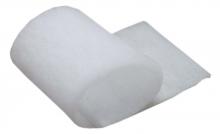
Airpura 900 Series Particle MERV13 Filter
$69.78